By: Edward Ortega, Headteacher Gimnasio del Norte
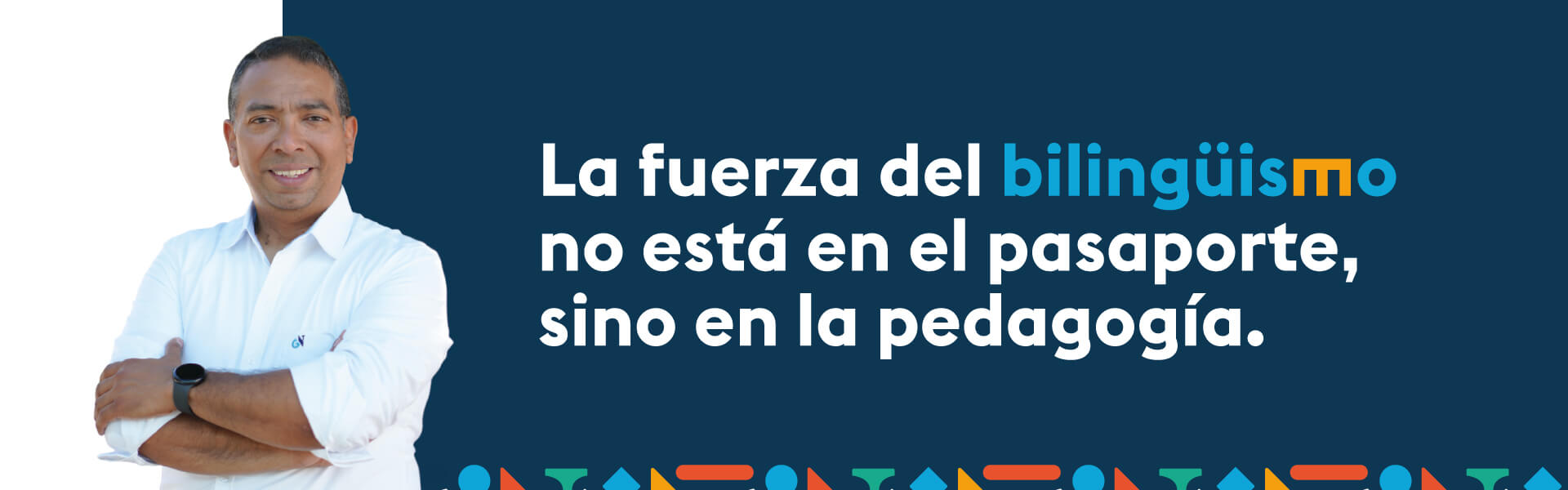
In conversations with families and colleagues, a deeply rooted idea often emerges: that a bilingual program only reaches true quality when it is staffed primarily by native-speaking teachers. It is an understandable perception; for years, a foreign accent was associated with excellence. Yet daily experience in our classrooms shows something different—and, I would argue, far more valuable: the strength of bilingualism lies not in a teacher’s nationality, but in the solidity of their pedagogy.
I see it every day. Colombian teachers with C1 or C2 certifications, rigorous training, and extraordinary commitment lead academic discussions, interdisciplinary projects, and science classes entirely in English. Students participate, argue, write, research, and communicate naturally. None of this happens because of a passport; it happens because of professionals who know how to teach, who master the language, and who deeply understand how to support a child in the process of language acquisition.
Sometimes immersion is imagined as something that depends exclusively on having a native speaker at the front of the classroom. However, immersion is not spontaneous; it is an intentional pedagogical design. It involves planning classes entirely in English, using authentic materials, creating routines that normalize the use of the language, and above all, fostering an emotionally safe environment where students dare to speak without fear of making mistakes. This immersion—built with care and consistency—is far more decisive than a teacher’s origin.
I have also seen how intercultural experience—having studied or worked abroad, participated in global projects, or lived alongside other cultures—greatly enriches teaching. Teachers who bring these experiences offer real context for the language: how it is used to solve problems, to collaborate, to understand different perspectives. This broader outlook opens doors that no accent can guarantee on its own.
Therefore, when we think about a strong bilingual program, we must focus on what truly builds quality: having teachers who master the language, who understand how children learn, who design meaningful experiences, and who sustain an ecosystem in which English is used to think and create, not just to translate or repeat. At our school, we work every day to make this vision a tangible reality in the classroom.
Our students do not need to sound like native speakers; they need authentic opportunities to expand their world. They need projects, conversations, readings, and challenges that allow them to use language as a tool for thinking. They need, ultimately, teachers who know how to guide them with rigor, sensitivity, and professionalism.
Bilingualism, more than a requirement or imported prestige, is a cultural project. It is a way of relating to the world, of understanding it, and of participating in it. And that project is built in the classroom, through the careful work of well-prepared, dedicated teachers who are deeply committed to their students’ growth. Quality is not measured in passports; it is measured in experiences that transform. Because, in the end, forming bilingual students does not depend on the teacher’s origin, but on the quality of their pedagogy and the ecosystem that surrounds it. Bilingualism is, above all, a cultural project.